Imagine a world where your business operations are as seamless and efficient as the finest orchestra, each component playing its part in perfect harmony. This is not a distant dream but a tangible reality made possible by business software inventory that changes everything. With its core functions and benefits, this technology redefines how businesses manage their resources, ensuring optimal performance and unparalleled efficiency.
By leveraging the power of inventory software, businesses can not only streamline their operations but also unlock new avenues for growth and innovation. It’s a game-changer that offers a plethora of features and integrations, designed to enhance productivity and drive success. Come, embark on this transformative journey and witness the revolution in business operations.
Overview of Business Software Inventory
In the fast-paced world of business, having a powerful software inventory system is not just a luxury; it’s a necessity. Business software inventory serves as the backbone for efficiently managing digital assets, ensuring that your organization runs smoothly and efficiently. Let’s dive into the undeniable benefits and essential features of this indispensable tool.
Business software inventory systems are designed to streamline processes, reduce errors, and provide real-time insights. By automating inventory tracking and integrating seamlessly with other business operations, these systems enhance productivity and decision-making capabilities.
Core Functions and Benefits
At its essence, business software inventory is about more than just tracking what’s in stock; it’s a comprehensive solution that transforms how businesses operate. It enables companies to:
- Monitor software licenses and compliance effortlessly.
- Optimize asset usage and minimize unnecessary expenditures.
- Automate updates and deployments to save time and resources.
- Enhance security by keeping track of software versions and patches.
- Generate detailed reports for informed decision-making.
Each feature is designed with one goal in mind: to empower businesses to focus on what they do best by providing them with the tools they need to succeed.
Primary Features of Inventory Software
The power of a business software inventory system lies in its diverse array of features, each meticulously crafted to address the dynamic needs of modern businesses. Here’s what you can expect from a top-tier inventory software:
- License Management: Track, manage, and renew licenses with ease.
- Asset Tracking: Keep an accurate record of all software assets across the organization.
- Compliance Assurance: Ensure all software is compliant with industry standards and regulations.
- Automated Alerts: Get notifications for license expirations and critical updates.
- Integration Capabilities: Seamlessly connect with other business systems for a unified solution.
These features form the core of what makes inventory software an invaluable asset in any business’s toolkit.
Integration with Other Business Systems
One of the standout advantages of business software inventory is its ability to integrate with a wide range of other systems, creating a holistic ecosystem that enhances operational efficiency. By connecting with enterprise resource planning (ERP) systems, customer relationship management (CRM) software, and more, inventory systems provide a unified view that breaks down silos and fosters collaboration.
Consider the following integration pathways:
- ERP Integration: Sync data seamlessly to ensure accurate and up-to-date inventory levels.
- CRM Integration: Connect customer data with software assets to tailor customer experiences.
- Financial Systems: Align software expenses with budgets for better financial oversight.
- Human Resources: Link with HR systems to manage software access based on employee needs.
By leveraging these integrations, businesses can unlock new levels of insight and control, paving the way for more strategic growth and innovation.
Impact on Business Efficiency
Imagine a world where your business operations run like a well-oiled machine. That’s what implementing an effective business software inventory can do. By optimizing the way you manage and analyze your software resources, this tool can revolutionize your business efficiency.
In today’s fast-paced business environment, the ability to streamline operations is not just an advantage—it’s a necessity. Business software inventory offers a systematic approach to managing your digital assets, ensuring that your operations are both productive and cost-effective.
Enhancing Operational Efficiency with Software Inventory
Software inventory systems enhance operational efficiency by automating routine tasks and consolidating data for easy access. This reduces the time employees spend managing software assets and increases their focus on core business activities. With real-time updates and analytics, decision-making becomes faster and more data-driven, allowing companies to stay ahead of the competition.
- Automated tracking of software licenses
- Centralized management and analytics
- Real-time updates and reporting
Cost Reduction Through Inventory Management
Implementing business software inventory is not just about efficiency; it’s also about saving money. By identifying redundant licenses, ensuring compliance, and preventing unauthorized software use, companies can significantly reduce costs.
“Efficiency is doing things right; effectiveness is doing the right things.” — Peter Drucker
Inventory software minimizes waste and optimizes resource allocation, leading to substantial cost savings and a stronger bottom line.
| Metric | Before Implementation | After Implementation |
|---|---|---|
| Average Time Spent on Software Management (hrs/week) | 15 | 5 |
| Monthly Software Costs ($) | 5000 | 3500 |
| Compliance Incidents | 3 | 0 |
Scalability and Adaptability
Imagine a business landscape where growth is not just a milestone but an ongoing adventure. Business software inventory plays a pivotal role in transforming this vision into reality, providing the tools necessary to scale and adapt effortlessly.
As your business expands, the demand for a robust yet flexible system becomes crucial. Inventory software not only supports scalable growth but also adapts to unique industry requirements, ensuring operations remain smooth regardless of size or sector.
Powering Scalable Growth
In a world where business momentum is everything, scalability is the secret sauce. Inventory software is designed to grow with you, eliminating the constraints that often accompany expansion. Here are the key ways it supports scalable business growth:
- Automated processes streamline operations, reducing manual intervention as volume increases.
- Real-time data insights allow for informed decision-making, driving growth strategies forward.
- Cloud-based solutions ensure access to critical information anytime, anywhere, facilitating remote expansion.
Adaptability Across Industries
Every industry has its quirks and demands, and the beauty of inventory software lies in its adaptability. From retail to manufacturing, its features are tailored to meet diverse needs, ensuring seamless integration and functionality:
| Industry | Adaptability Features |
|---|---|
| Retail | Real-time stock updates and multi-location tracking |
| Manufacturing | Production scheduling and raw material management |
| Healthcare | Lot tracking and regulatory compliance |
Scenario: Scaling a Growing Business
Picture a small retail business on the cusp of expansion. With a strategic plan in place, it’s ready to embrace larger markets:
- Initial setup: The inventory software integrates with existing systems, providing a seamless transition.
- First expansion: With sales data analyzed, the software supports new location launches efficiently.
- Rapid growth phase: As the product line expands, automated reorder alerts ensure stock levels meet demand.
- National presence: Multi-location inventory management keeps operations synchronized across regions.
“Adaptability and scalability in inventory software are not just features, but catalysts for business evolution.”
Real-time Data Access and Analysis
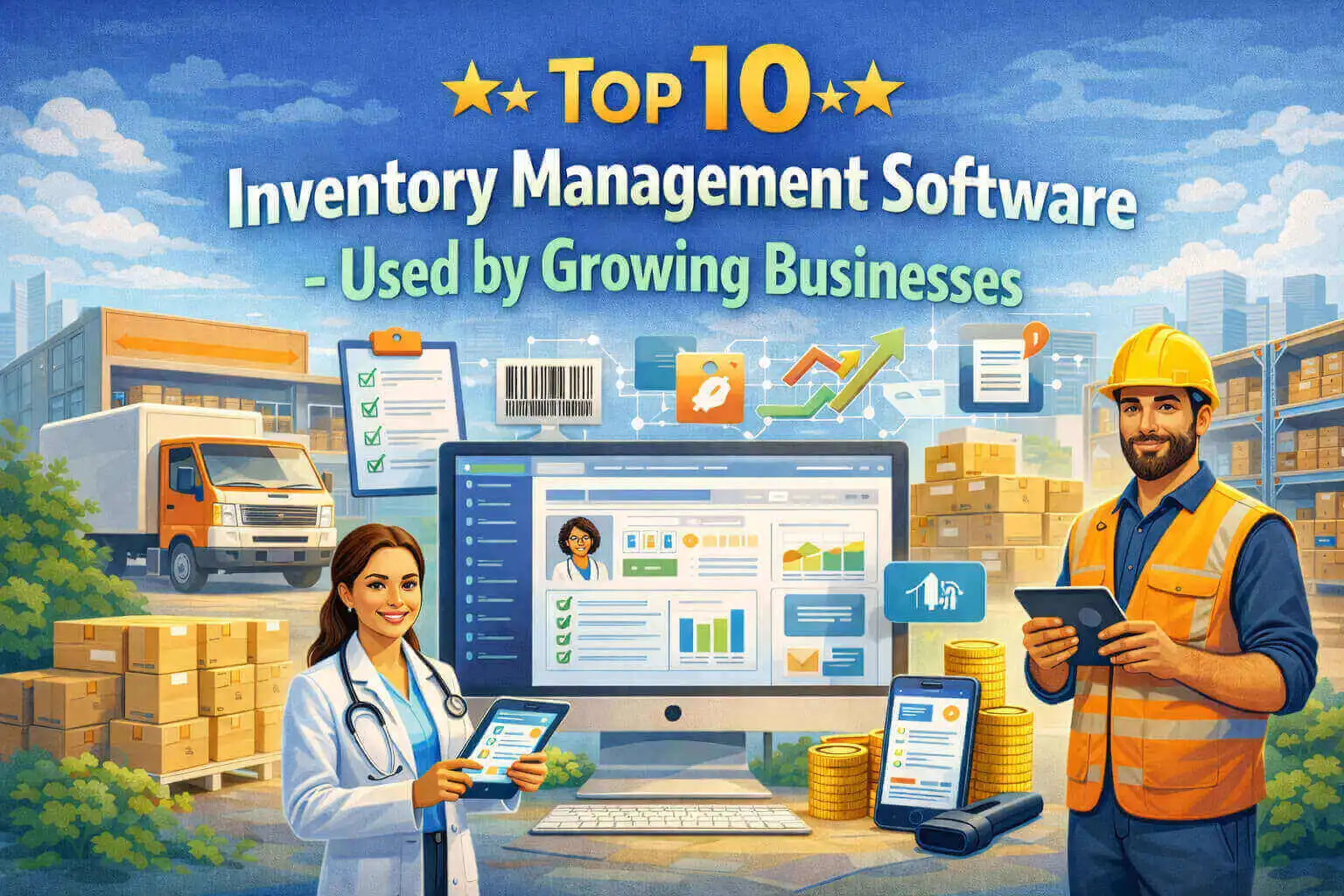
Imagine having a crystal ball for your business operations, where every data point is immediately at your fingertips. Real-time data access transforms this dream into a vibrant reality.
In today’s fast-paced business environment, the ability to access and analyze data in real-time is not just an advantage; it’s a necessity. Real-time data access empowers businesses to make informed decisions swiftly, adapting to market changes and customer needs with remarkable agility.
Empowering Business Decisions with Real-Time Insights
Real-time inventory software provides businesses with crucial insights that are immediately actionable. Let’s explore how:
| Feature | Benefit |
|---|---|
| Instant Stock Levels | Eliminates guesswork with up-to-the-minute inventory counts |
| Live Sales Tracking | Enables immediate response to sales trends and demand changes |
| Automated Alerts | Prevents stockouts and overstock situations with timely notifications |
Moreover, the ability to access and analyze data in real-time means that decision-makers can act on current information, rather than relying on outdated reports.
“Businesses making decisions on real-time data are like skilled surfers navigating the waves, while those without it are left paddling in the tide.”
Consider a retail company that, through real-time insights, spots a sudden spike in demand for a particular product. With this knowledge, they can rapidly adjust stock levels and marketing strategies to capitalize on the trend, maximizing sales and customer satisfaction.
Customization and User Experience
Imagine a world where business software molds itself seamlessly to fit the unique contours of your enterprise. This is the promise of customization in business software inventory, a feature that can transform a generic platform into a bespoke powerhouse.
The customization options available allow businesses to tailor their software solutions to meet specific needs, enhancing functionality and optimizing user experience. By personalizing these tools, companies can streamline processes, increase efficiency, and improve overall satisfaction for all users involved.
Tailoring the Software to Fit Your Needs
Customizing business software inventory involves more than just aesthetic changes. It’s about creating a system that works for you, with all the features you need and none of the ones you don’t. Here’s how you can achieve this:
- Identify business requirements and key areas where customization can add value.
- Work with software providers to understand the customization options available.
- Leverage modular features to add or remove functionalities as required.
- Regularly review and adjust settings to ensure they continue to meet evolving business needs.
- Engage with a community of users or forums to share insights and customization tips.
Enhancing User Experience with Custom Interfaces
Customizable interfaces are not just about aesthetics; they are the key to unlocking a more intuitive and efficient user experience. By allowing users to personalize their dashboards, highlight essential data and streamline navigation, businesses can significantly enhance usability. This is not merely a superficial upgrade, but a strategic overhaul that aligns software functionality with user preferences and workflows.
Consider this: the ability to tailor interfaces means users spend less time searching for information and more time acting on it. Efficiency is further enhanced as intuitive layouts minimize errors and reduce training time for new users. The outcome? A significant boost in productivity and user satisfaction, resulting in a harmonious blend of technology and human interaction.
The true power of customization lies in its ability to create a software environment that feels naturally aligned with the way your team works.
Future Trends in Business Software Inventory
The world of business software inventory is on the cusp of a revolution. With technology advancing at a breakneck pace, inventory management is poised to become more efficient, adaptable, and intelligent than ever before.
As businesses seek to optimize operations, emerging trends in inventory management software are set to redefine how organizations track, manage, and utilize their assets. These trends will not only enhance operational efficiency but also pave the way for smarter and more agile business environments.
Integration of Artificial Intelligence and Machine Learning
The future of inventory management will heavily rely on Artificial Intelligence (AI) and Machine Learning (ML). These technologies promise to deliver predictive analytics that can forecast demand with incredible accuracy, ensuring that businesses maintain optimal stock levels without the risk of overstocking or understocking. AI-driven insights will allow companies to make data-backed decisions effortlessly, improving overall inventory control and reducing costs.
Enhanced Automation and Robotics
Automation in inventory management is evolving, with robotics playing a significant role in streamlining operations. Future software designs will likely incorporate robotic process automation (RPA) to handle repetitive tasks such as sorting, counting, and labeling, thereby minimizing human error and boosting productivity. This move towards enhanced automation will free up human resources to focus on strategic decision-making and innovation.
Increased Focus on Sustainability
The push towards sustainability cannot be ignored in the realm of inventory management. Future software solutions will incorporate tools to help businesses manage their inventories with an eco-friendly approach. This might include features like carbon footprint tracking, sustainable supplier management, and waste reduction analytics, all contributing to a greener business strategy.
Conceptual Roadmap for Future Developments
The following roadmap artikels anticipated advancements and innovations in business software inventory over the coming years:
- 2024-2025: Expansion of AI capabilities to include sentiment analysis for market trends.
- 2025-2026: Full integration of Internet of Things (IoT) for real-time inventory tracking and environmental monitoring.
- 2026-2027: Development of virtual and augmented reality interfaces for immersive inventory management experiences.
- 2027-2028: Launch of blockchain-based tools for transparent and secure inventory transactions.
- 2028-2029: Introduction of quantum computing elements to handle complex inventory optimization scenarios.
“In a world that’s constantly changing, the only constant is innovation. Businesses that embrace these future trends will lead the charge into a new era of inventory management.”
Final Summary
As we stand on the brink of a new era in business operations, the role of inventory software becomes ever more critical. It is not just a tool; it is the driving force behind scalable growth, data-driven decision-making, and enhanced user experiences. The future is bright for those who embrace these advancements, and the time to act is now. So, are you ready to let business software inventory change everything for your enterprise?

