Imagine a world where you can effortlessly manage your business’s inventory, staffing, payroll, and budgeting with the touch of a button. Welcome to the realm of business software solutions, where efficiency meets innovation. In an age where time is money, these tools are not just conveniences—they are game changers. Whether you’re a small business owner or part of a large corporation, leveraging the right software can significantly streamline operations and boost productivity.
With the right business software, you can transform the way you manage your resources. This isn’t just about adopting new technology; it’s about revolutionizing the way you do business. From optimizing stock levels and ensuring efficient workforce management to automating payroll and enhancing budget tracking, these software solutions are designed to save your business time and money, allowing you to focus on what truly matters—growth and innovation.
The Role of Business Software in Streamlining Inventory Management
In the fast-paced world of business, managing inventories effectively can be the difference between success and failure. Business software tailored for inventory management acts as the backbone of efficient operations, ensuring your shelves are stocked just right.
Utilizing advanced inventory management software can significantly optimize stock levels and reduce waste. These systems are designed to track inventory in real-time, providing businesses with the crucial data needed to make informed decisions.
Optimizing Stock Levels with Smart Inventory Solutions
Inventory management software is incredibly powerful. It optimizes stock levels by predicting demand, preventing overstocking or understocking scenarios. This is essential for maintaining a balanced inventory that meets customer demand and minimizes storage costs. For instance, features like automated reorder alerts trigger orders when stock levels hit a predefined threshold, ensuring you never run out of essential items.
Advanced Inventory Tracking Features
Today’s inventory software comes packed with features that enhance efficiency. Barcoding and RFID tagging, for instance, allow for real-time tracking of inventory, reducing manual errors and saving time. This not only streamlines the tracking process but also provides a comprehensive overview of stock movements within the supply chain.
“Real-time data is the lifeblood of modern inventory management.”
Making Informed Decisions with Real-Time Data
With real-time data at your fingertips, businesses can make informed decisions quickly. This data-driven approach allows managers to adjust inventory levels based on current market trends, seasonal demands, and unexpected shifts in buying patterns. The ability to access up-to-date information means your business can respond to changes with agility and precision.
Integrating Inventory Management with Other Business Processes
Seamless integration of inventory management software with other business processes is crucial. By linking inventory systems with sales, finance, and supply chain management, businesses can achieve a holistic view of operations. For example, software that integrates with accounting systems can automatically update financial records as inventory levels change, ensuring accurate budgeting and financial reporting.
| Feature | Benefit |
|---|---|
| Automated Reorder Alerts | Prevents stockouts and overstocking |
| Real-Time Inventory Tracking | Reduces errors and improves efficiency |
| Integration with Other Systems | Provides a unified view of business operations |
Enhancing Staffing Efficiency through Software Solutions
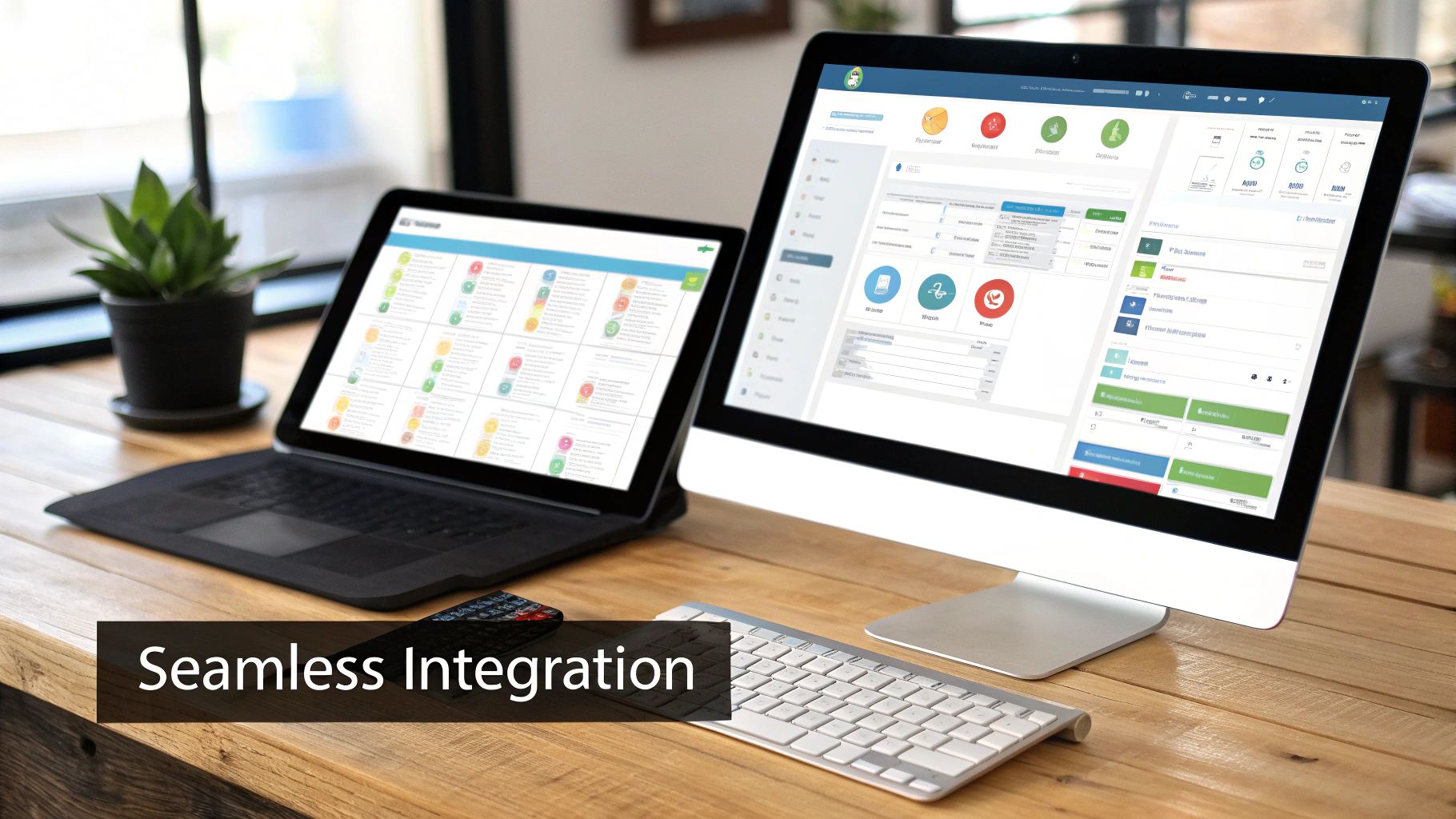
In today’s fast-paced business environment, managing your workforce effectively is crucial. Leveraging software solutions can transform your staffing strategy from chaotic to streamlined, saving your business time and money.
Gone are the days of manually scheduling your workforce across different shifts. With the advent of advanced staffing software, businesses can now automate complex workforce management processes, ensuring optimal efficiency.
Discover the Power of Automated Staffing Solutions
Implementing automated staffing solutions can significantly enhance your business operations. These tools not only simplify scheduling but also reduce human error and administrative overhead. With real-time data and analytics, decision-making becomes seamless, and adjustments can be made on the fly. Imagine having the ability to predict staffing needs based on historical data trends and current demands—these software solutions make it possible.
To help you navigate the sea of options, here’s a comparison of some leading staffing software tools:
| Software Name | Key Features | Benefits | Pricing |
|---|---|---|---|
| ShiftWizard | Automated Scheduling, Real-Time Compliance Monitoring | Reduces Scheduling Conflicts, Enhances Compliance | Starts at $3/user/month |
| WorkForce Suite | Time & Attendance, Workforce Analytics | Improves Productivity, Informed Decision-Making | Custom Pricing |
| Deputy | Drag-and-Drop Scheduling, Shift Notifications | Boosts Employee Engagement, Saves Time | Free – $4/user/month |
| Kronos Workforce Ready | Cloud-Based, Integrated Payroll | Streamlines Payroll, Boosts Efficiency | Quote-Based |
By implementing staffing software, businesses can
dramatically reduce administrative workload
. Automation takes over repetitive tasks such as shift allocation, time tracking, and payroll integration. This not only frees up valuable time for HR personnel but also ensures that data is accurate and reliable. As a result, managers can focus on strategic initiatives rather than getting bogged down by daily operational details.
Streamlining Payroll Operations with Business Software
In the dynamic world of modern business, efficiency is key, and nowhere is this more evident than in payroll operations. Leveraging dedicated business software can transform payroll processing from a tedious task to a seamless, automated operation.
Gone are the days of manual calculations and endless spreadsheets. Today’s software solutions offer a streamlined approach to managing employee compensation, ensuring accuracy, compliance, and timeliness.
Automation of Payroll Processing
By automating payroll processing, businesses can significantly reduce errors and improve accuracy. Dedicated payroll software automatically calculates wages, deducts taxes, and processes payments with minimal human intervention. This not only saves time but also frees up HR personnel to focus on more strategic tasks.
Imagine a system where data entry is minimized, and calculations are executed with precision. This is the promise of modern payroll software—an efficient, reliable partner in your business’s financial operations.
Comparing Traditional Methods with Modern Software Solutions
Transitioning from traditional payroll methods to advanced software solutions can be a game-changer for businesses. Let’s compare these two approaches:
| Traditional Payroll Methods | Modern Software Solutions |
|---|---|
| Manual data entry and calculations | Automated data processing |
| Prone to human error | High accuracy and reliability |
| Time-consuming and labor-intensive | Time-efficient and cost-effective |
| Limited reporting capabilities | Advanced analytics and reporting |
As illustrated above, the shift to software not only enhances efficiency but also boosts the overall operational potential of your payroll department.
Compliance Features in Payroll Software
With changing laws and regulations, compliance is a critical aspect of payroll management. Payroll software offers a range of features to help businesses stay compliant effortlessly:
- Automatic updates to tax rates and regulations
- Accurate calculations of overtime and benefits
- Comprehensive record-keeping and audit trails
- Integration with tax filing systems
These features ensure that your business adheres to the latest legal standards, reducing the risk of costly fines and penalties.
The Role of Payroll Software in Ensuring Timely Employee Compensation
Timely employee compensation is crucial for maintaining morale and trust within your organization. Payroll software plays a vital role in ensuring that employees are paid accurately and on time, every time. It manages pay cycles, handles direct deposits, and generates payslips, all while maintaining the highest levels of security.
Timely and accurate payroll processing is not just a business necessity—it’s a promise to your employees.
By adopting payroll software, businesses can uphold this promise with confidence, establishing a work environment where employees feel valued and motivated.
Budget Management Tools and Their Impact on Business Savings
In the intricate world of business finance, the ability to effectively manage and optimize budgets can be the deciding factor between profit and peril. Budget management tools are no longer optional; they are essential for sustainable growth and fiscal health.
These tools offer businesses the capacity to foresee financial trends, track expenditures, and identify savings opportunities with precision. As businesses navigate the complexities of modern markets, harnessing technology to streamline budget management becomes a game-changer.
The Power of Budget Forecasting in Financial Planning
Budget forecasting tools serve as a crystal ball for businesses, allowing them to anticipate and prepare for future financial challenges. By integrating historical data with predictive analytics, these tools provide insights that are both actionable and accurate. This foresight not only aids in financial planning but also imbues confidence in decision-making processes.
Functionalities of Budget Tracking and Analysis Software
Modern budget tracking software offers a suite of functionalities that simplify and enhance the budgeting process. From real-time tracking of expenditures to detailed analysis of spending patterns, these tools equip businesses with the knowledge needed to make informed decisions. Key features include:
- Automated expense categorization
- Customizable budget reports
- Integration with financial systems for seamless data flow
- Alerts for budget variances
Identifying Cost-Saving Opportunities through Software
Software that assists in budget management is not just about keeping track of expenses; it’s about discovering hidden efficiencies and cost-saving opportunities. By analyzing spending data, these tools can pinpoint areas where costs can be reduced without compromising on quality or performance. For example, identifying recurring unnecessary expenses or optimizing vendor contracts can lead to significant savings.
Take a look at this comparison of budget management tools with their cost features and business advantages:
| Budget Software | Cost Features | Business Advantages |
|---|---|---|
| BudgetMaster | Subscription-based with tiered features | Scalable solutions for growing businesses |
| FinTrack Pro | One-time purchase with updates | Comprehensive reporting and integration options |
| CostCutter Suite | Pay-per-feature model | Tailored cost-saving insights for SMEs |
In the digital age, the right budget management tool can be a company’s most valuable asset, unlocking pathways to efficiency and profitability.
Integrating Business Software to Maximize Overall Efficiency
Seamlessly integrating business software can transform your operations, turning complex processes into streamlined workflows. The key lies in effectively connecting inventory, staffing, payroll, and budget systems to create an overarching ecosystem that elevates efficiency.
This integration is not only about linking systems but about ensuring they communicate effectively, creating a symphony of data that empowers decision-making and enhances operational agility.
Strategies for Unifying Business Software Solutions
To maximize efficiency through integration, consider these strategies:
- Evaluate current systems for compatibility and connectivity.
- Adopt middleware solutions to facilitate data exchange between different software platforms.
- Ensure that all departments are engaged in the integration plan to align priorities and workflows.
- Leverage cloud-based platforms for flexible and scalable integration.
Benefits of a Unified Business Software Ecosystem
A unified business software ecosystem allows for more than just smooth operations; it offers a unified view of business functions, leading to:
- Informed decision-making with real-time data accessibility.
- Improved cross-departmental collaboration and communication.
- Reduction in manual errors and duplicated efforts.
- Enhanced customer service through faster response times and better resource allocation.
Success Stories of Integrated Software Solutions
Businesses around the world are reaping the rewards of software integration. Consider these examples:
“Company A successfully integrated their inventory and payroll systems, reducing staffing costs by 15% due to better resource allocation.”
Another example is:
“Company B unified their budgeting and staffing software, which led to a 20% increase in project delivery times by aligning budget resources with human capital.”
Infographic Concept: Visualizing Integrated Software Workflows
Visualizing integrated workflows can simplify the understanding of complex processes. Here’s an infographic concept:
- Start with a central hub representing the unified software ecosystem.
- Branch out into four main areas: Inventory, Staffing, Payroll, and Budget.
- Use arrows to show the flow of data and interactions between each system.
- Include key metrics and potential outcomes, such as time saved and efficiency gains.
This visualization will provide a clear and concise view of how integration can drive business success.
Choosing the Right Business Software
In the bustling arena of business operations, choosing the right software can feel like navigating a labyrinth. However, selecting the perfect fit is paramount to unlocking efficiency and driving growth.
From enhancing productivity to ensuring seamless integration, the right software solution is a cornerstone of modern business success. Let’s delve into the crucial factors that should guide your decision-making process.
Evaluating Business Software Solutions
When it comes to selecting business software, a few critical criteria stand out. It’s not just about the bells and whistles; it’s about finding a solution that aligns with your company’s unique needs and goals. Here’s what to consider:
- Scalability: Can the software grow with your business?
- Compatibility: Does it integrate smoothly with your existing systems?
- Cost-Effectiveness: Does it provide value for its price?
The Significance of User-Friendliness
Imagine software that feels as intuitive as your favorite app. The significance of user-friendliness in software selection cannot be overstated. A user-friendly interface ensures that your team can leverage the software to its fullest potential without a steep learning curve. In essence, usability translates to productivity.
“A seamless user experience is a catalyst for increased efficiency and employee satisfaction.”
The Role of Customer Support and Updates
Software satisfaction extends beyond initial implementation. The role of customer support and regular updates is crucial in maintaining ongoing success. Quality customer support means you’ll have assistance when issues arise, while regular updates ensure your software evolves alongside technological advancements and business needs.
| Aspect | Importance |
|---|---|
| Customer Support | Provides resolution and guidance when needed. |
| Updates | Keeps the software relevant and secure. |
Key Performance Indicators for Measuring Software Effectiveness
Once implemented, assessing software effectiveness is essential to ensure it meets your business objectives. Key Performance Indicators (KPIs) provide measurable insights into software performance. Focus on metrics such as:
- Reduction in operational costs
- Improvement in process efficiency
- Increase in user satisfaction and adoption rates
- Enhancement in data accuracy and reporting
By monitoring these indicators, businesses can adjust strategies and maximize the value derived from their software investments.
Final Thoughts
As you embark on the journey of integrating business software into your operations, envision the potential for growth and efficiency that lies ahead. These tools are not merely a means to an end; they are the catalyst for a smarter, more agile business. Embrace the power of modern technology and watch as your business transforms, saves time, and maximizes potential. Don’t wait to elevate your business to new heights with the strategic use of software that caters to your inventory, staffing, payroll, and budget management needs. The future of your business awaits—grasp it with both hands.

